
Name of Monument: Badshahi Masjid
Location: Lahore
Dater of construction: 1671-1673
Materials of Construction and finishes: Bricks, white marble, red sandstone
Aurangzeb.
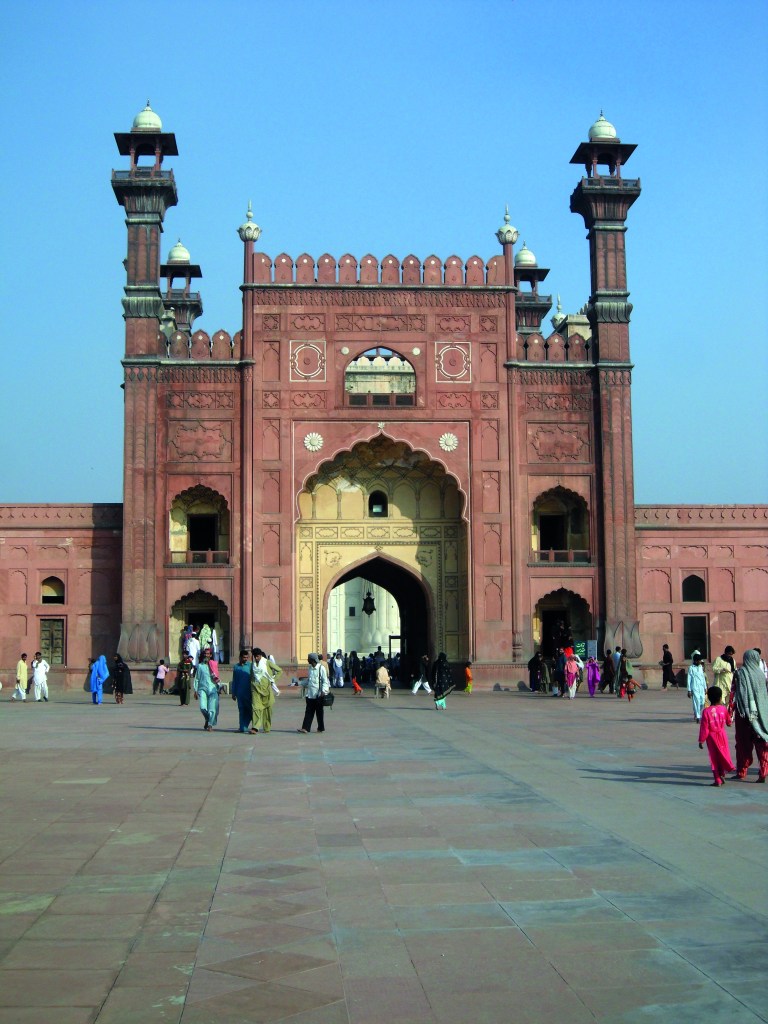
Badshahi Masjid (1084 AH/1673-74 AD) is one of the most impressive contribution of Aurangzeb period. Visually it echoes the Jamia mosque of Shah Jahanabad and Fatehpur Sikri in terms of basic design concepts and use of materials. The main entrance two storeyed high faces the east and entrance platform is approached by 22 steps forming three-sided pyramid. The central pishtaq and flaking bays on the either sides have a pair of small arched niches placed vertically one above the other. The entire construction of mosque in brickwork is clad with red sandstone inlaid with white marble. The façade is divided into rectangular panels carved in low relief. Pair of square shafts is attached to the sides of the slightly projecting central bay and terminate above the roof with white marble domelets. The four corner minarets terminate in a wide projected platforms over which rests square kiosks. A tablet of white marble above the pishtaq has the following inscription (besides the Kalima Tayyaba): “The mosque of Abu Zafar Mohiuddin Muhammad Alamgir, the Ghazi King, completed under the superintendence of the humblest servant of the household, Fidai Khan Koka, in 1084 AH31
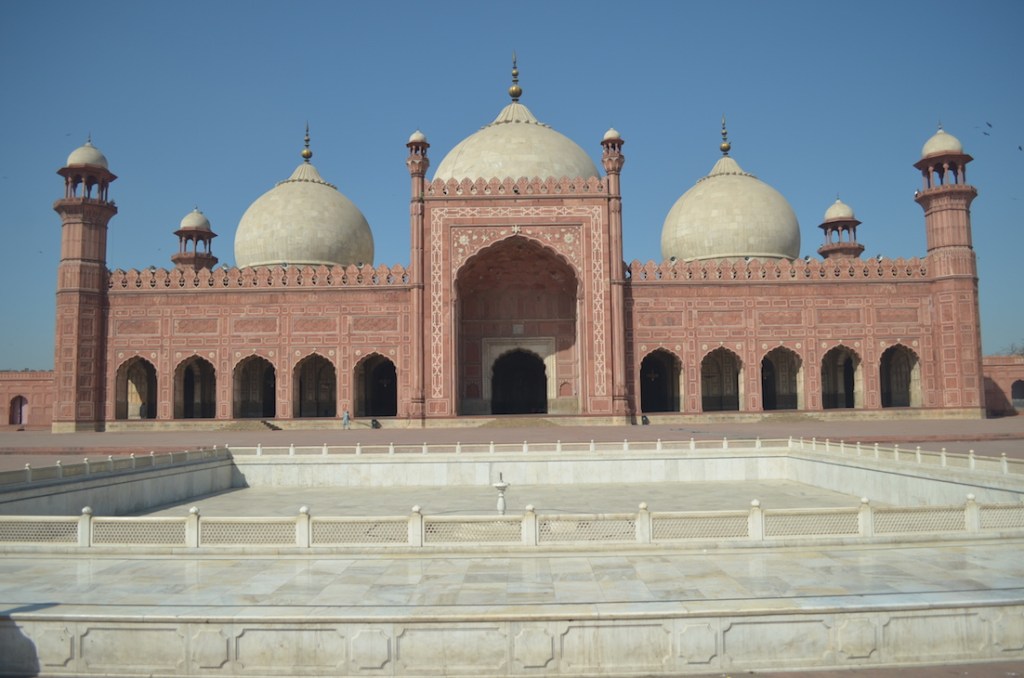
From the gateway one enters into the courtyard measures 530 feet on each sides. It is flanked eighty cloisters on all sides. The courtyard consists of two parts. The lower part contain ablution tank. Few years back, the floor of the mosque was laid out in small bricks, making a pattern of musalla but now it is replaced by red sandstone. The prayer chamber lies on a high plinth in the middle of the western edge of the courtyard. The front façade contain high pishtaq in the middle flanked by five arched opening on either sides set in the general roof line of prayer hall. The main arch of the pishtad is framed with marble inlay while the spandrel of the arch has delicate floral arabesque. There are rectangular panels above the smaller arches and decorated with inlay work. The hardness of red sandstone is beautifully soften up with marble inlay work. The corners of the prayer chamber are marked by four smaller minarets with projected platforms surmounted by domed kiosks. The parapet is formed by horizontal row of merlons. The main iwan of prayer hall is flanked by side spaces. The interior of the prayer chamber is surmounted by three bulbous double domes of white marble and rest on cylindrical drums. The central dome is higher than the two on its either sides.


 Naqoosh-e-Javidan