
Name of Monument: Bhamala Stupa
Location: Khanpur Tehsil, District Haripur
Date of Construction: 2nd century AD:
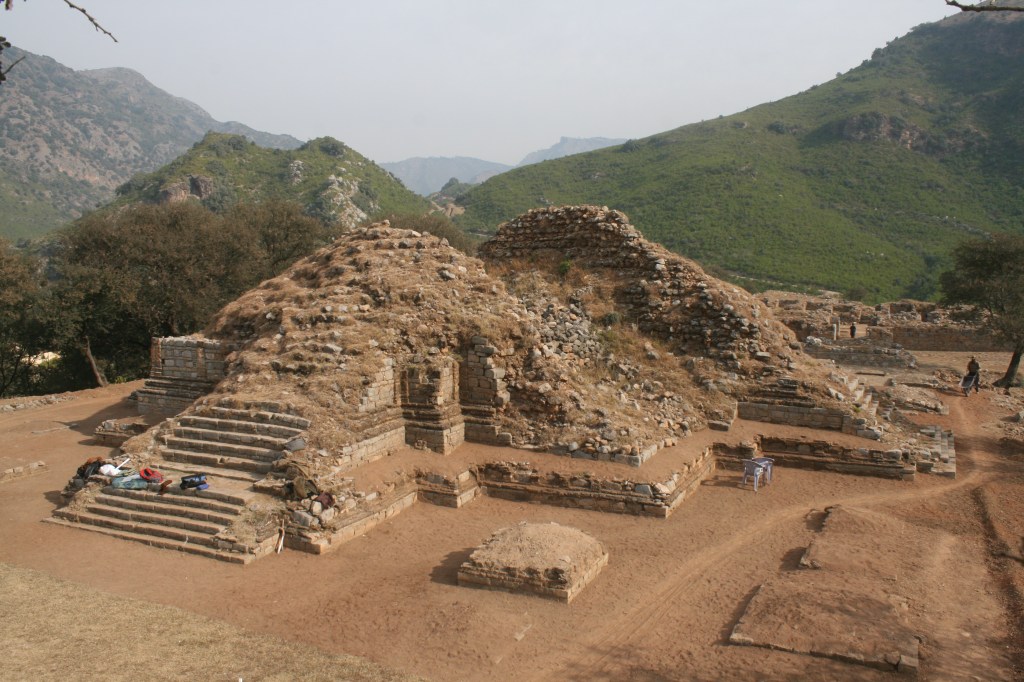
Bhamala is one of the most important Buddhist archaeological sites in the Taxila region near Khanpur Dam, in district Haripur of the Khyber Pakhtunkhwa (KP) province. The stupa has cruciform plan. Sir John Marshall was the first archaeologist to excavate the Bhamala stupa in 1930–31. However, the site was not excavated fully as Sir Marshal concentrated his research resources at the famous site of Sirkap.
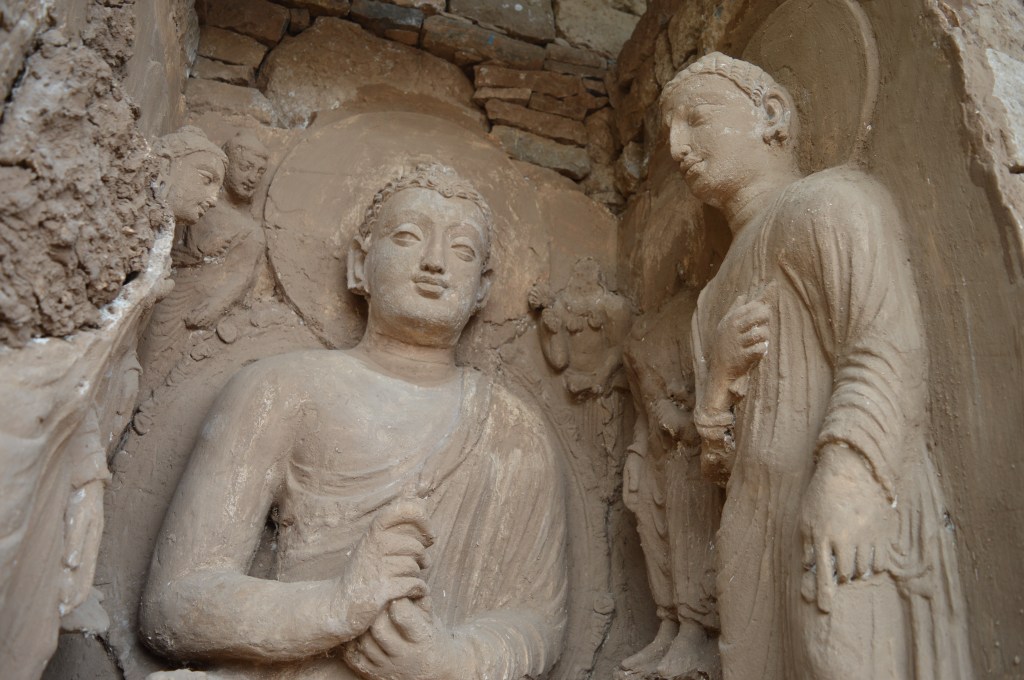
The excavations have brought to light many important archaeological artefacts and important structural remains. Finds from the excavation include terracotta and stucco sculptures, coins and iron and copper objects. The second main cruciform s tupa was also discovered surrounded by a subsidiary stupa and chapels adorned with many stucco sculptures. The most remarkable discovery made was a 14m-long reclining Buddha (Parinirvana), said to be the largest in the world. Many terracotta images were also discovered from inside the Parinirvana chamber showing worshipers and mourners. Made of dressed Kanjur stone blocks, the colossal Buddha statue is seated on a stone platform inside a long mourning chamber and, like other monumental mages of reclining Buddha reported from Afghanistan and Tajikistan, the Bhamala Buddha also faces the main stupa. Radiocarbon dating was carried out on charred wood and charcoal taken from inside the terracotta sculpture placed around the monumental Parinirvana image. Laboratory reports
estimate the Parinirvana was made during the 3rd century AD. This means the monumental image from Bhamala is the earliest representation of Parinirvana Buddha. Evidence suggests it predates all known colossal Parinirvana images reported to date. Thus, the Bhamala site is older than Ajanta in India, Tappa Sardar and Bamiyan in Afghanistan, Adzihna Tepe in Tajikistan, Daunghaung in China and the Chui Valley in Kirghizstan. Furthermore, it is the only example of Parinirvana Buddha in Kanjur stone to date.

 Naqoosh-e-Javidan