
Name of Site: Dharmarajika Supa
Location: Taxila
Date of Construction: 3rd century BC
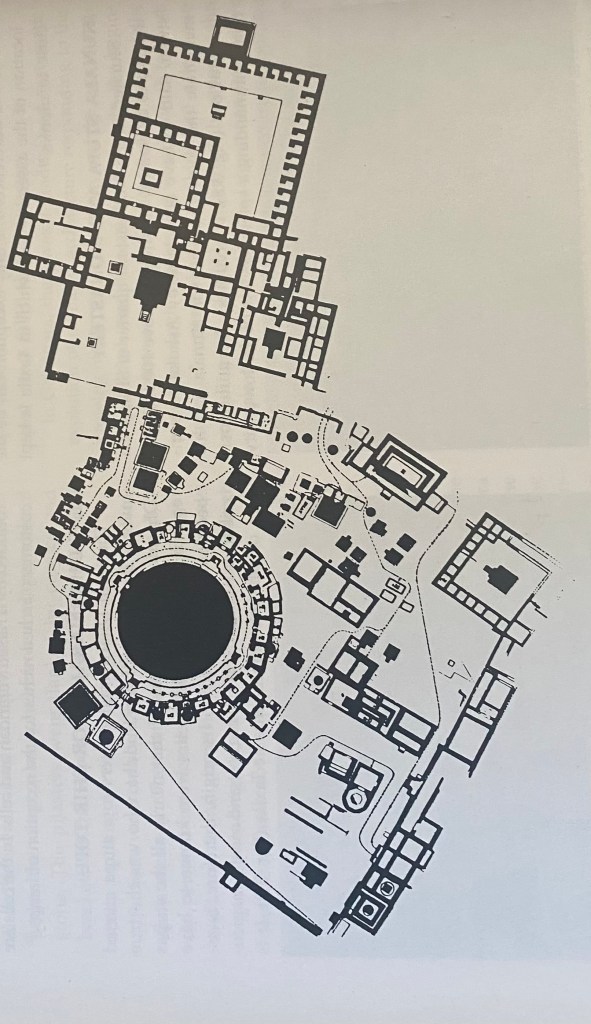
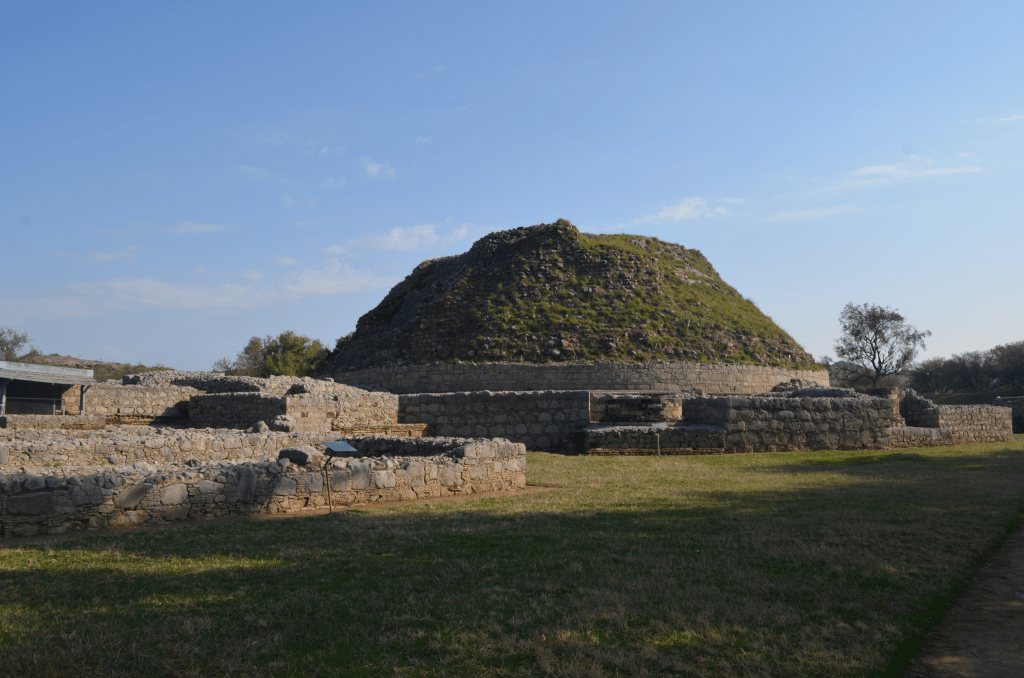
The Dharmarajika Stupa, popularly known as Chir Top, is a circular structure with a raised terrace around its base. A circle of small chapels surrounds the great stupa. Three distinctive types of masonry in the buildings around the main stupa suggest the contributions of different periods to the building activity. A silver scroll inscription in kharoshti and a small gold casket containing some bone relics of Buddha were found in one of the chapels. The inscription refers to the relics, by a Bactrian named Ursaka from the town of Noacha in the year 136 BC, the bestowal of health on “the great King, supreme King of Kings, the Son of Heaven, the Kaniska.” The site also contained several statues of Buddha and Bodhisattvas.
The archaeological remains spread over vast area, the main stupa was built in a circular plan, with a 131 feet wide diameter and a 45 feet high drum. The stupa is constructed in solid masonry and has a raised terrace around its base which was ascended by four flights of steps. The structure is surrounded by an open paved passage, which served in ancient days as a procession path. The courtyard of the stupa area is further bordered by numerous other chapels and several votive stupas, erected by the pilgrims and visitors, dating from 1st century BC to 1st century AD and from 3rd to 5th century AD, respectively. These stupas were decorated with Buddha images and figurines. To the north of the great stupa lie the monastic area which formed the living quarters and workspaces for monks.


 Naqoosh-e-Javidan