
Name of Monument: Ghaznavid Mosque
Location: Udegram, Swat
Material of Construction: Stone
Date of Construction: 1048-49 AD
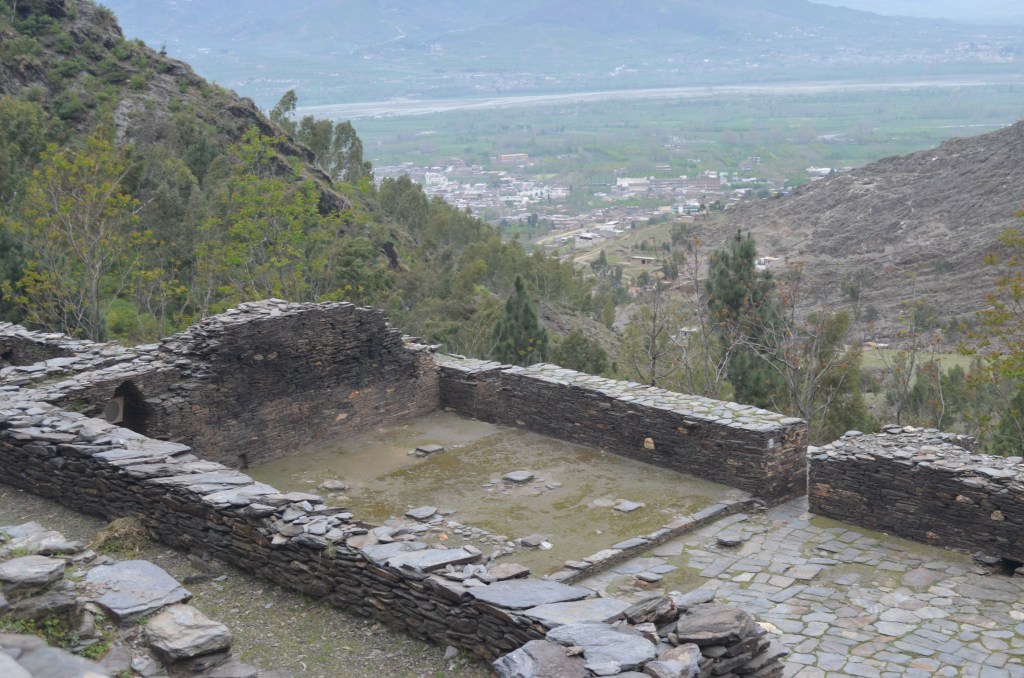
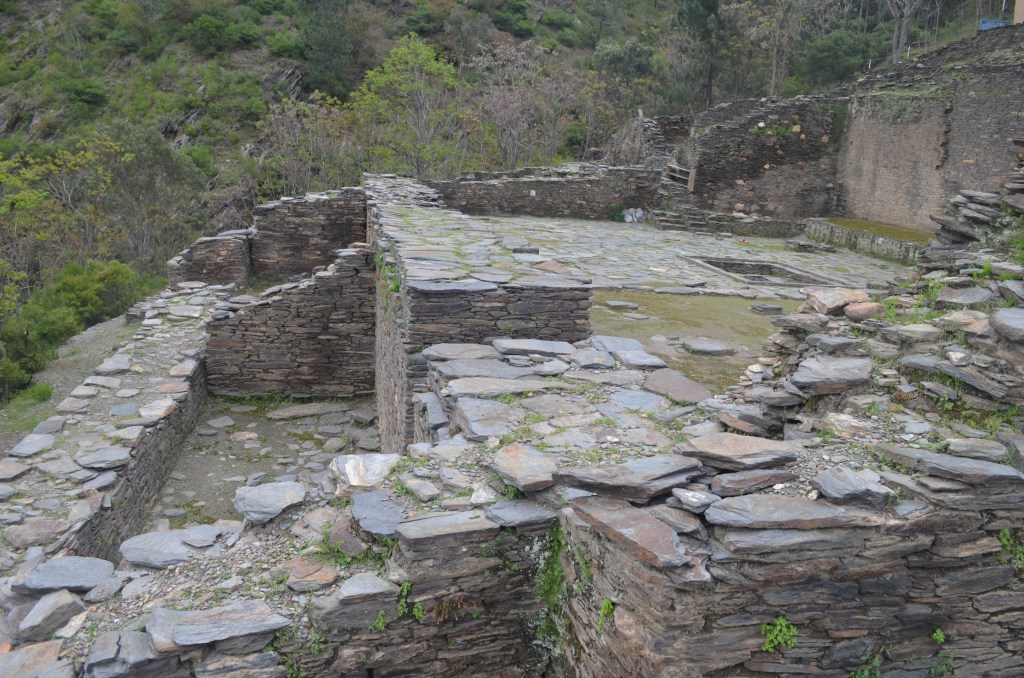
The Udegram mosque stands about 320 feet lower than the so-called ‘Castle’, a defensive structure that occupies the rocky spur of the mountain with an extensive wall-circuit, dominating a large area of the valley. It was founded at the end of the 5th century AD, but major occupation of the site on the basis of superimposed structures of Hindu Shahiya Period belonged to the 7th-10th centuries AD following the Muslim conquest at the beginning of the 11th century and lasting with the arrival of the Mongolian hordes at the end of the 13th century. The original mosque foundation, maybe smaller than the actual, was founded soon after the Mahmūd’s conquest in the first decade of the 11th century. The mosque probably have been subsequently enlarged to its final shape when marble inscription in Arabic, was fixed at site. The early Muslim invaders in most often cases constructed mosque to commemorate the victory and built houses to make firm control over the area by the settlement of the population. The same was the case with the Udegram mosque. The excavation at site revealed three distinct phases of occupation, i.e., the Gandharan period, the Hindu Shahiya period and Islamic period. The inscriptional evidence explicitly associates the construction of the Udigram mosque with a Ghaznavid’s governor named Anushtigin, dated 440 AH/ 1048-9 AD.

 Naqoosh-e-Javidan