
For more than a century, the story of Buddhism and Buddhist Art and Architecture remained confined to present day Khyber Pakhtunkhwa province of Pakistan. The innumerable evidence from this part of the country overshadowed the pivotal role played by Punjab, the land of five rivers and Sapta Sindu, the land of seven rivers of the ancient Vedic literature. In fact, the real history Buddhism started within the plains of Punjab. The remnants of that periods are laying buried underneath the mounds and waiting to be explored and to see sunlight prior to their last breath as these are being damaged/plundered by antiquity looters and farmers. These views were expressed by Dr. Muhammad Hameed, Chairman Department of Archaeology, University of the Punjab, who and his team discovered a 2000-year-old civilization in the form of huge cultural/archaeological mounds scatter along the old river bed of Jhelum between Sargodha and Jhang.
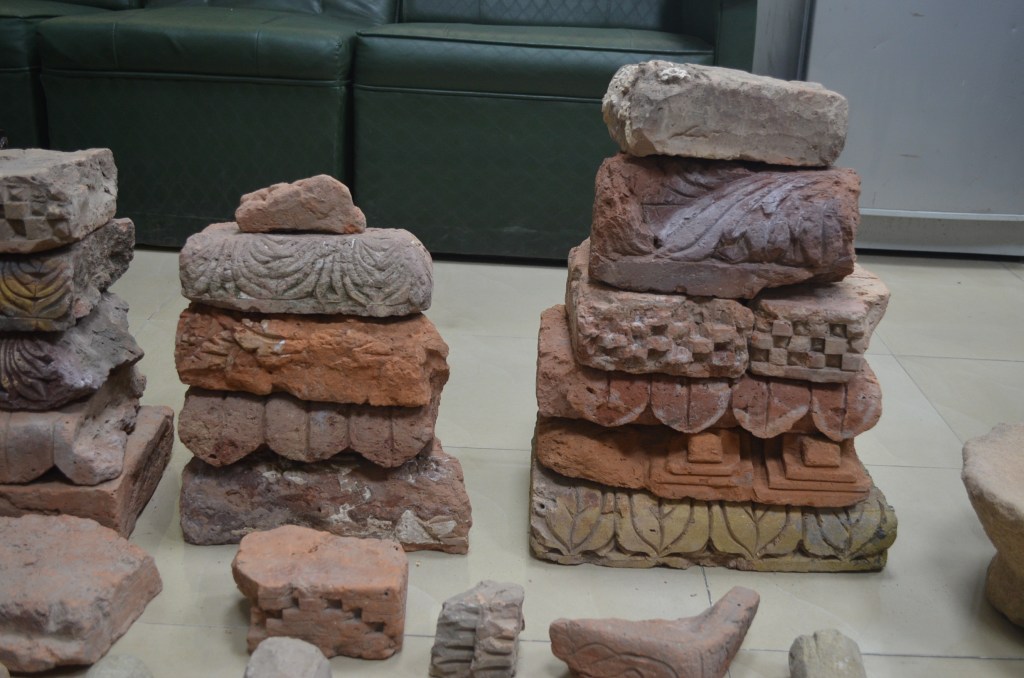
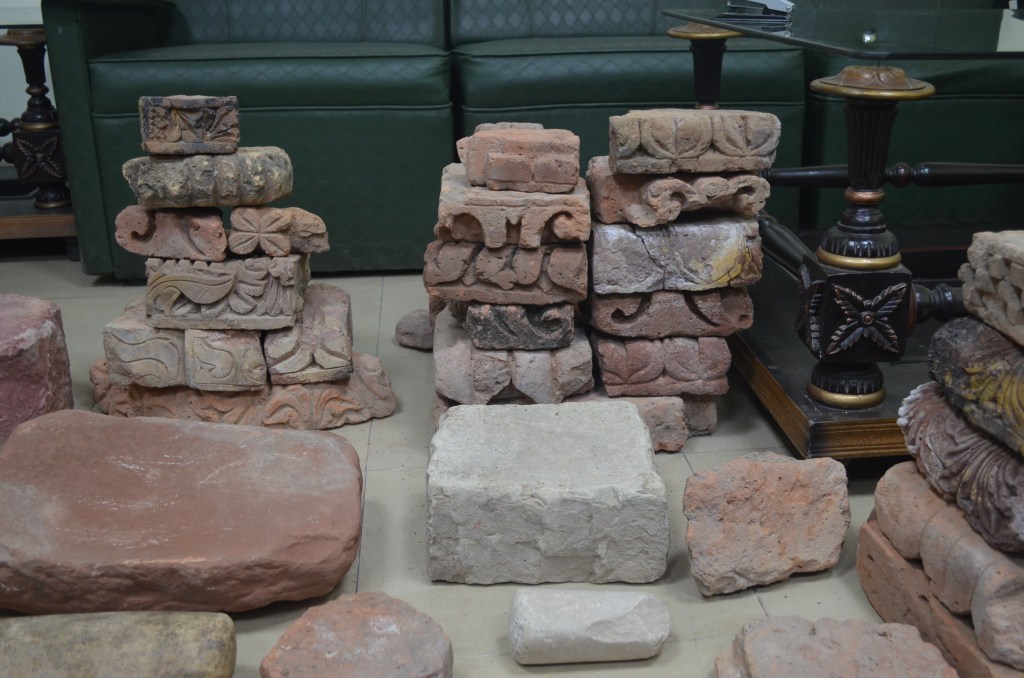
The presents find were discovered from Tibba Panj Pir and Tibba Rankinn located near small village Nihang, Tehsil Chota Sahiwal. Among the prominent finds include Buddhist period mounds/settlements, Buddhist narrative art in terracotta, Greco-Roman Buddhist art, and sacred/ceremonial tanks representing the four elements of the universe (water, air, fire, and earth). The relief panel is the only example found from the plain of Punjab and provided us the first glimpse of the classic narrative art being produced in this region. The discovery of beautifully carved burnt bricks showing geometric, Corinthian floral and lotus patterns identical to the typical Gandharan style are clear cut indication of the presence of Buddhist stupa and monasteries which would have been equally popular and vibrant as was the case in Gandhara. The other small but unique finds include fragments of Stupa umbrella Chataras, human and animal footprints, grinding stones and dabbers used to finish pottery.

 Naqoosh-e-Javidan