
Name of Monument: Shahi Masjid
Location: Seetpur, Muzaffargarh District
Period of Construction: Early 16th century
Materials of Construction: Brick. Glazed bricks and plugs
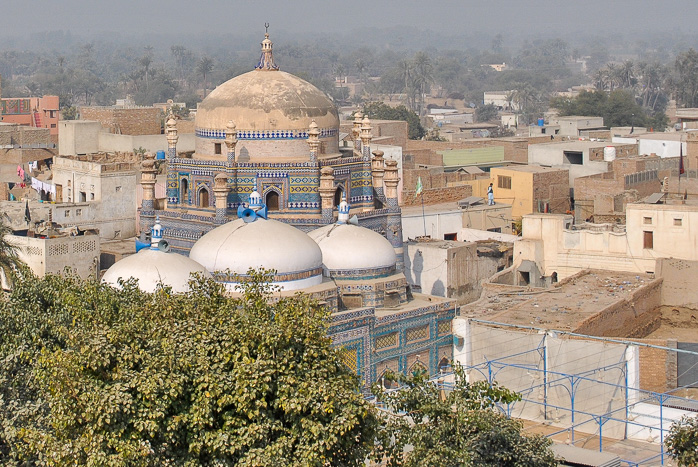
The mosque stands immediately to the southeast of the tomb of Tahir Khan Nahar, an early 16th-century ruler in the southern Punjab. The mosque and the mausoleum were built at the same time, as it was fairly common practice to combine both functions at the same location.
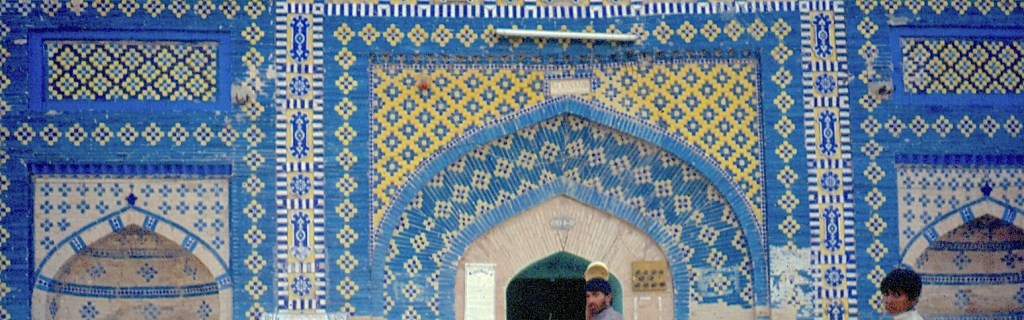
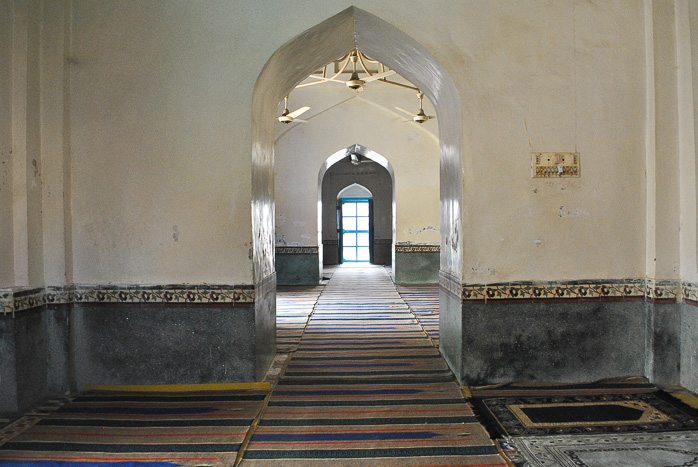
The decorative scheme of the mosque was inspired from the traditional architecture of Multan particularly the tomb of Shah Rukn e Alam. The central bay of the mosque is larger and higher than those flanking it which in turn are topped by octagonal drums and hemispherical domes. The interior walls are now mostly whitewashed, suggesting that the decorative scheme may have comprised frescoes which are no longer extant. One exception is the space around the mihrab, which is colorfully and tastefully clad in a variety of modern tiles that recreate traditional Mughal motifs such as symmetrical vases, flowering plants, and bands of calligraphy. The exterior of the mosque presents beautiful display of geometric patterns executed in different colors such as blue, light blue, white and yellow.
 Naqoosh-e-Javidan