
Name of site: Jandial Temple
Location: Taxila
Date of Construction: 2nd century BC
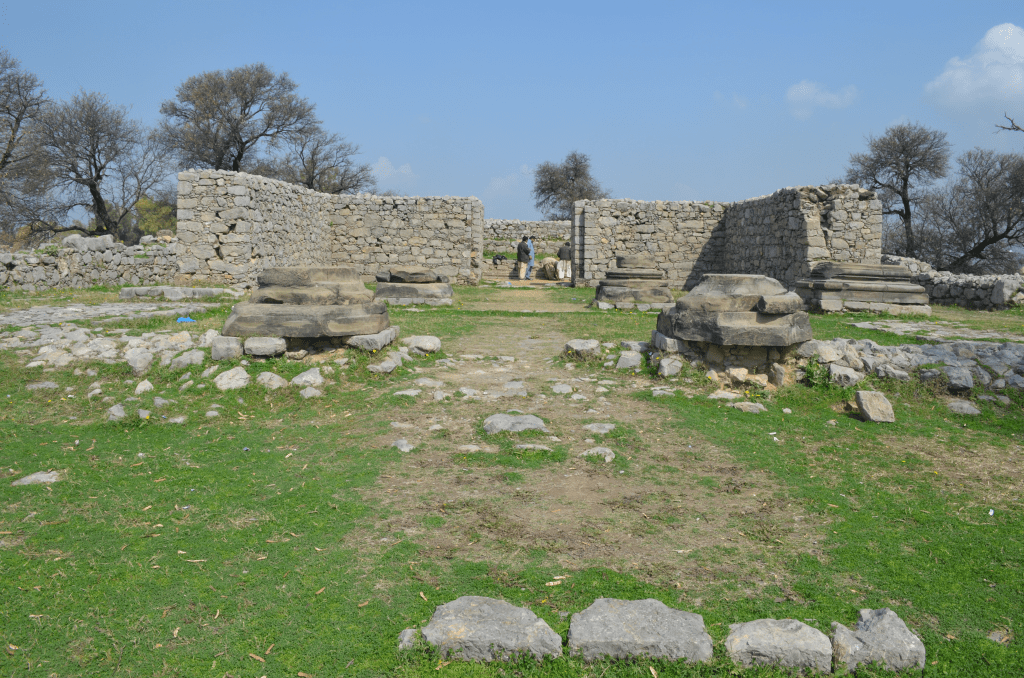
The Jandial temple is located about one-mile opposite side of north gate of Sirkup. The date of construction of temple goes back to 2nd century BC. It is an excellent example of hybrid classical style temple architecture that combines Greek and Indian design elements. The temple was built of limestone and adorned with columns, voluted capitals, and friezes and other decorated elements. the main shrine is rectangular in plan but instead of the usual collonade found in Greek temples, the wall is solid masonry with pierced window opening. Behind the main shrine is a set of stairs that leads to a platform where a Parthian fire sanctuary probably existed in the first century BC. At this time Greek culture spread throughout the area in the wake of Alexander the Great conquest in the 327-325 BC. The Jandial temple represents the fusion of different architectural tradition with creativity and innovation of the builders of Taxila. The intrinsic qualities of the temple’s architecture can be seen in various aspects of its design and construction.
Firstly, the temple’s layout is a perfect rectangle, divided into three chambers. The central chamber is the largest, while the side chambers are smaller. This symmetrical design gives the temple a sense of harmony and balance. Secondly, the temple was constructed using large, finely cut blocks of sandstone, which were precisely laid to form the walls and roof of the structure. This shows the skill and precision of the ancient builders in handling stone as a building material. Thirdly, the temple features intricate carvings on its walls and columns, depicting scenes from local Indian mythology, animals and human figures. The carvings are finely detailed and demonstrate the high level of artistic skill and creativity of the ancient artisans. Fourthly, the temple’s design incorporates various astronomical alignments, with the main entrance facing the east to catch the first rays of the rising sun. Finally, the temple’s roof is sloping and flat, which may have been intended to serve as an observation platform for studying the stars and planets. This suggests that the temple was not only a place of worship but also a center for scientific and astronomical research.


 Naqoosh-e-Javidan