
Name of Monument: Khudaka Masjid
Location: Mohalla Garhi Afghanan, Fawara Chowk, Multan
Date of Construction: 1290 AH
Material and method of Construction: Bricks and glazed bricks, interior fresco paintings
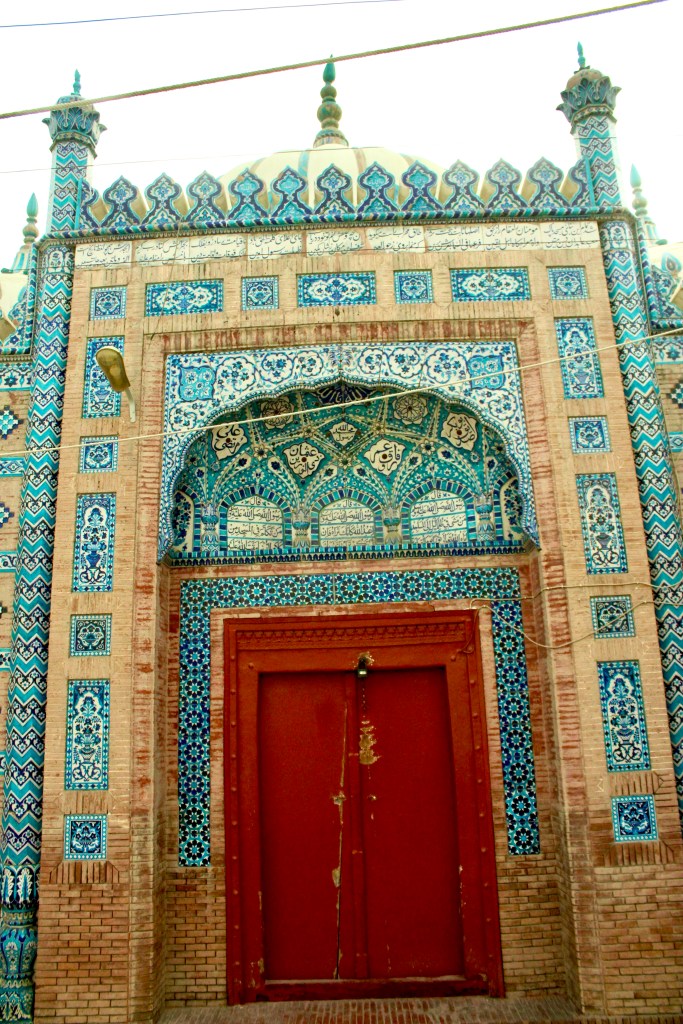
The Khudaka mosque is situated in a dense neighborhood near Chowk fawara about half mile West-South-West of the tomb of Shah Rukn-e Alam. It is a small structure aligned north-south having three bays covered with fluted domes. The central bay is bigger than the two on the either side. In the front facade, the central bay is defined with two slender shafts decorated with zig-zag pattern and topped with guldasta turrets with domelets in the middle. The building is profusely covered in traditional kashi-kari tiles having chahar khani designs in the exterior and fresco paintings on the interior. One unusual feature of the qibla wall in the interior of the mosque is the incorporation of ‘maps’ of Kahana Kaba and Masjid-e Nabvi and their surrounding as decorative elements on the interior, as found on the rear wall of the north and south bays. One map features a bird’s eye view of the Kaaba in Mecca, whereas another depicts a densely populated city. Overall, the mosque’s decorative treatment is typical of Multan school of architecture: the three-bay mosque, the use of geometric decoration, corner towers and chhatris, and the use of domes. In the interior the mosque is inscribed with Quranic verses ans Persian couplets. It is typical of 18th century mosque built in south Punjab. The proportion of the mosque are superb.

 Naqoosh-e-Javidan