
Name of Monument: Masjid Dai Anga
Location: Railway Station, Lahore
Date of Construction: 1649
Materials of Construction and Finishes: Brickwork, lime plaster, faience mosaic, fresco paintings.
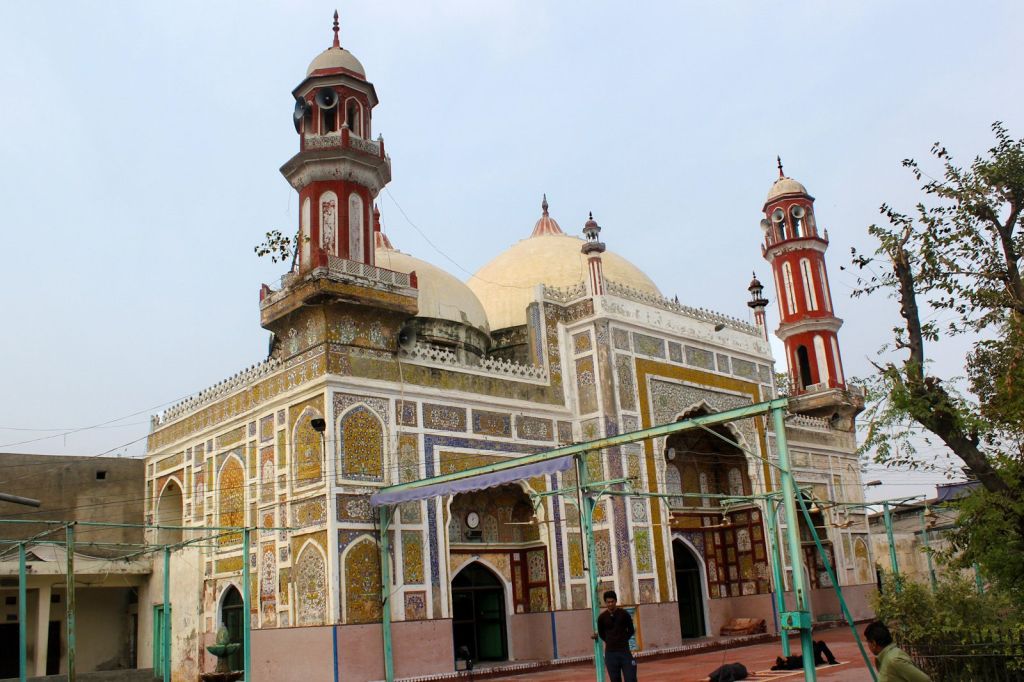
Dai Anga constructed a mosque in 1649 AD in Naulakha area with the expanses from her own pocket. The mosque is notable for its minute and refined enameled tiled mosaic work in the exterior as well as under the soffit of the pishtaqs. The prayer chamber is divided into three bays by means of lateral arches. Each bay is covered with a dome, the central dome rising higher than the two flanking domes. The dome over the central square bay rests on the zone of transition formed by squinch arches. The side bays, less elaborately decorated, have double domes resting on pendentives. All the domes are raised on high cylindrical drums with sharply recessed collars at the springing point. The east facade of the prayer chamber reflects the internal plan with multifoil pishtaqs. The pishtaq of central bay is taller and wider than its two on adjacent sides. The arch of pishtaq is framed with calligraphic bad inscribed with sura Al-Juma (62). The mihrabs were created by arched recess sunk deeply into the western wall. The projected frame is marked with slender pilasters on either corner, while at the two eastern corners of the prayer chamber is square minarets surmounted with a carved platform. Inscription on its façade indicates that it was built under the supervision of Maqbool, whom some have associated with Khawaja Maqbool, a trusted servant of Dara Shikoh.

 Naqoosh-e-Javidan