
Name of monument: Masjid Nawab Zakariya Khan
Location: Begumpura
Period of Construction: Late Mughal period
Materials of construction and finishes: Brickwork, glazed tiles
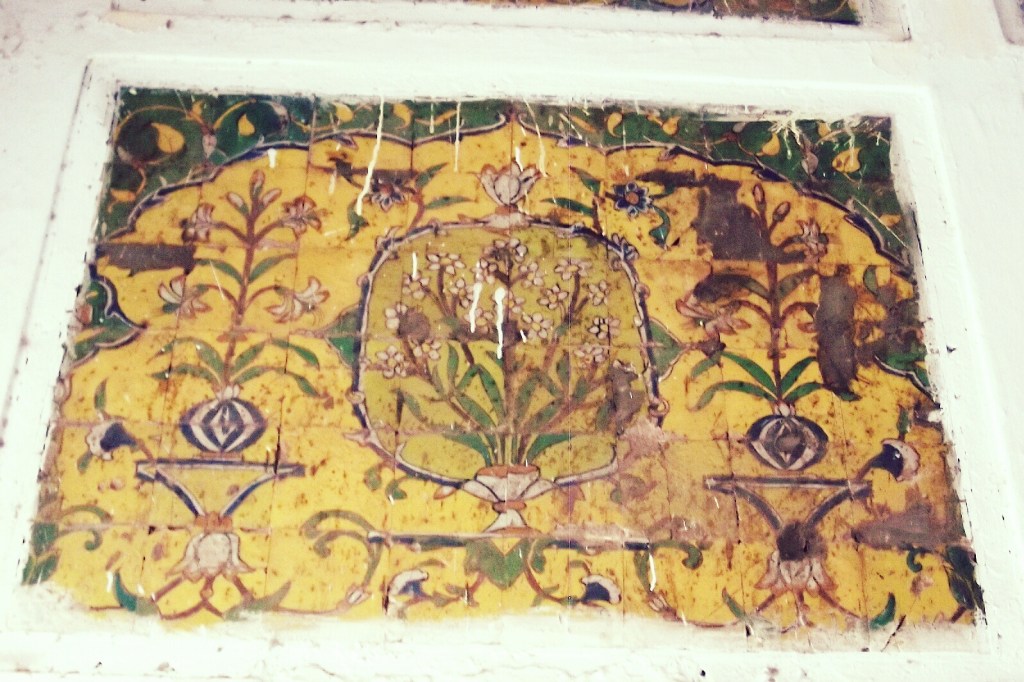
Nawab Zakariya Khan, governor of Lahore, built a mosque in the name of his mother in a locality known as Begumpura. The harmonious mosque of Begampura with a bangladar roof and green glazed tiles painted with elegant floral designs is a unique monument of the late Mughal period at Lahore. The mosque has a double iwan, which is its most unique feature among other mosques of Lahore. The original surviving part of the mosque is its prayer chamber having five arched openings in the front. It is an oblong structure measuring 70 feet 8 inches by 41 feet 6 inches and having two long bays, divided by means of wide arches into four inter-communicating compartments, two side rooms and a central chamber. The ceiling of these compartments is created by means of vaultings, the façade of the central compartment has been given the shape of a concave curvilinear with a rib in the centre. The three arched openings on the north and south sides, now blocked, originally opened in the courtyard. Inside the chamber, the Qibla wall has five niches. Instead of the usual central niche being larger, the two adjoining niches on either side are bigger in size instead, which is the most unusual feature of this mosque. On the east of the iwan, lies a large courtyard of considerable dimensions. Of the surface ornamentations, the revetment consisting of square glazed tiles of yellow colour is prominent. The façade of the prayer chamber has inscriptions in glazed tiles having the Kalima and a Quranic verse.

 Naqoosh-e-Javidan