
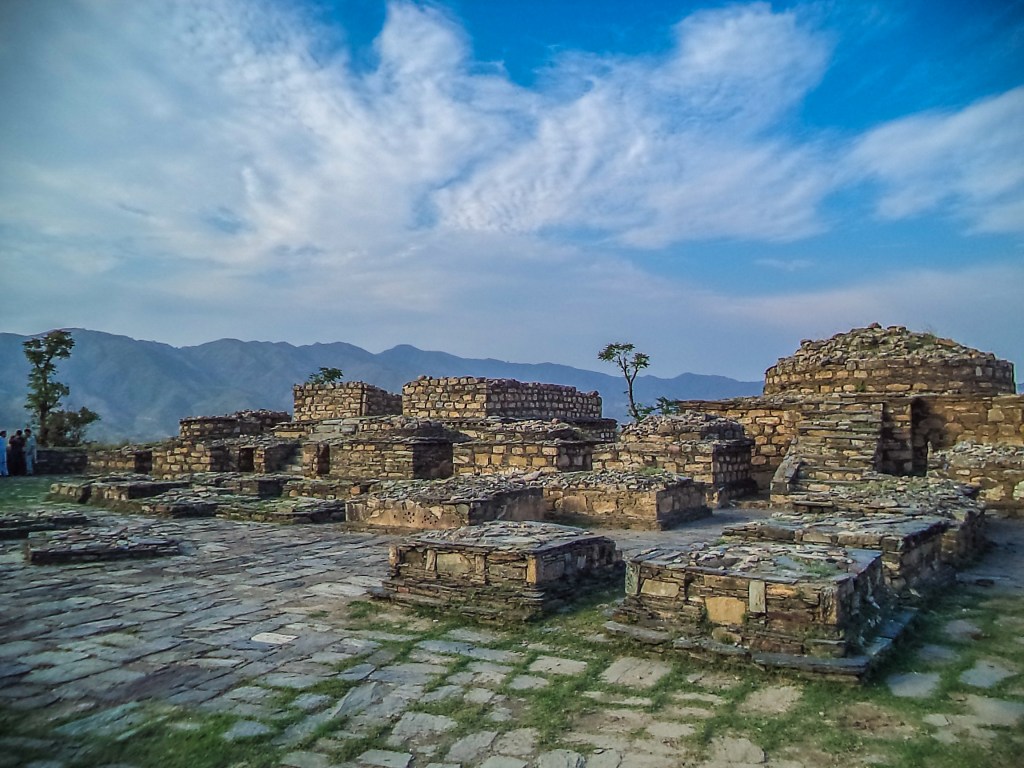
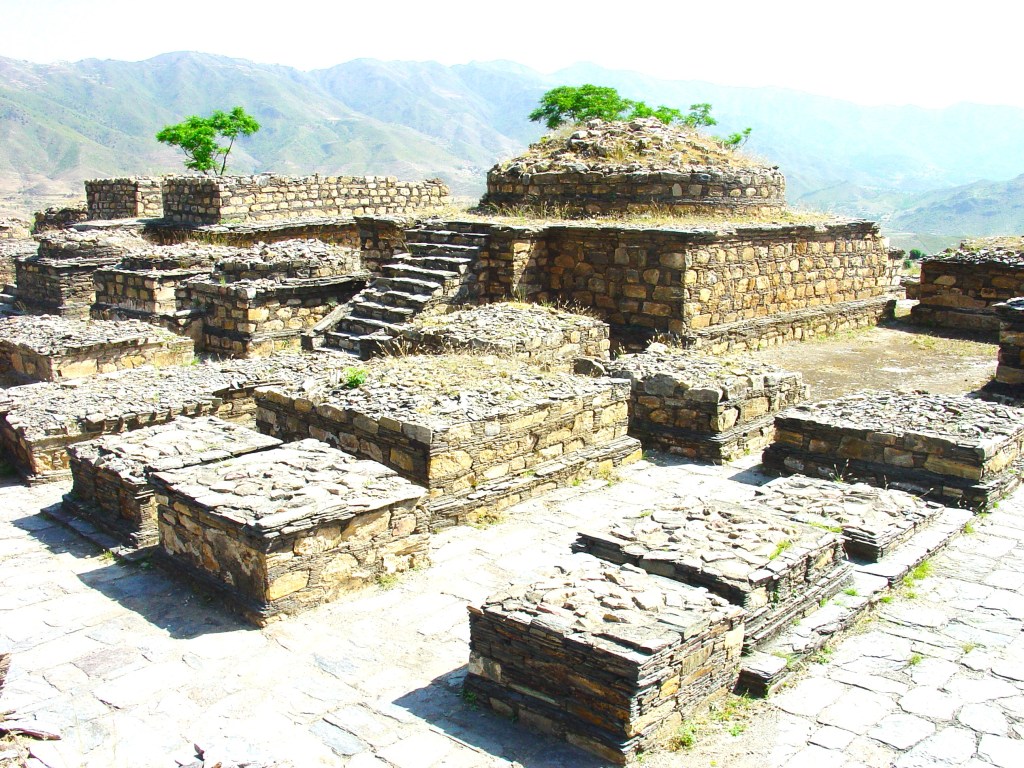
Nemogram stupa is located 45 km west of Saidu Sharif and 22 km from Barikot on the right bank of Swat River. This site was discovered in 1966 and excavated in 1967–68. Swat (the former Uddiyana Kingdom) is rich in historical landmarks as well as natural beauty. The si was first excavated by Aurel Stein, a British archaeologist, and followed by Italian mission led by Tucci, to these monuments.
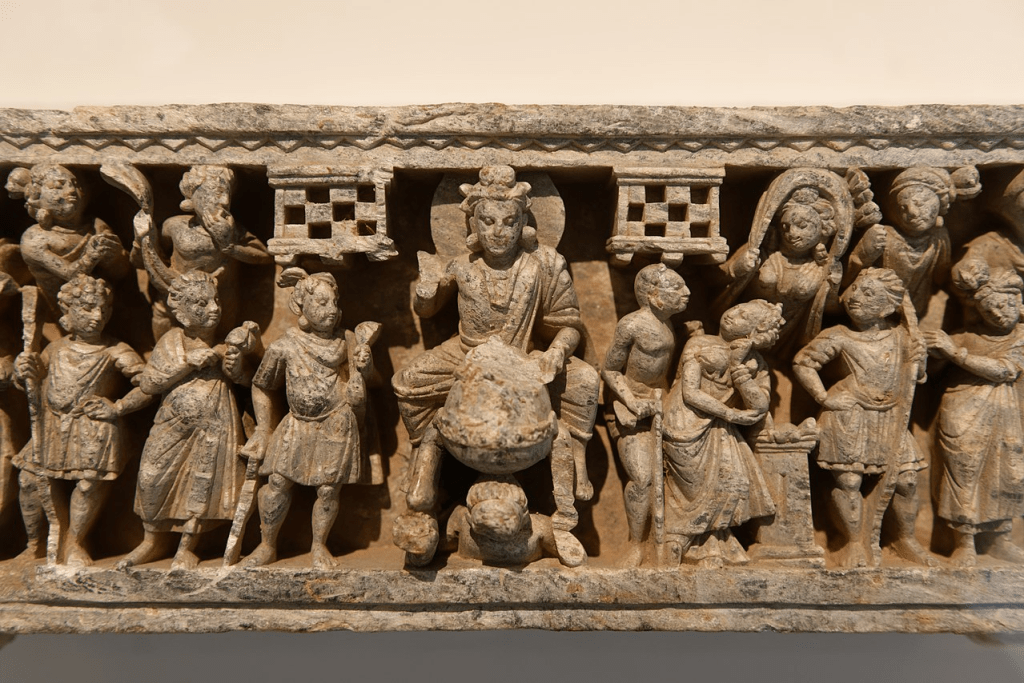
There are three main stupas in row from north to south and 56 smaller stupas. There is also a monastery on the west of the main stupas. The stupas are believed to have been built in 2-3 century AD based on the discovery of coins from Kushan Period. Apart from the coins and pottery of Scytho-Parthian period, a large number of stone, stucco sculptures depict various scenes of Buddhist mythology were found near the stupa and placed in Swat Museum. These sculptures are on display in Swat Museum. There are a large number of stone carvings and sculptures signifying the Buddhist Mythology.
Among the discovered artifacts are images of Buddha, Bodhisattva, narrative reliefs, decorative and architectural elements, Buddha miracles, secular scenes, reliquaries, relic caskets and utilitarian objects. The muscular Atlas always supports pillars and brackets, naked cupids carrying a wreath, the gandharvi with musical instruments, winged creatures in triangular brackets, tritons, Amorini and numerous other narrative scenes. Domestic scenes of marriages, love making, hunting, wrestling, archery, groups of ascetics, warriors, processions of men, kings riding on a chariots and general enjoyment. Large-scale artifacts in Nimogram complex represent narrative scenes and decorative friezes, images of Buddha as well as Hindu deities.
 Naqoosh-e-Javidan