
Name of Monument: Satyan jo Asthan
Period of Construction: Early 17th century
Materials of construction: Yellow stone and blue and white tile decoration.
The real history of the tomb is not known. Legend has it that seven women, who came with Mohammad Bin Qasim, chose this hilly area as their home. Others claim that the women came even before the conqueror set foot here. Raja Dahir, the Hindu ruler at that time, set his unholy sights on the women, who were unmarried and scared about protecting their honor. They prayed to God to save them and, as the tale goes, were sucked into the very earth where they were kneeled in prayer. Today, the site is marked by a cave-like passage. The tomb seems to have been constructed during Akbar period.
This beautiful structure lies immediately on the right bank of the river Indus which engulfs it during the high flood season. There are several folk stories associated with this edifice but, this was a burial place of Mir Abu Al-Qasim Namkeen who remained on an important position during Mughal rule. During Jahangir’s reign Abdul Qasim Namkeen was stationed at Gujrat with responsibility of intercepting the rebellion of Prince Khusro near Rohtas in 1605. The prince was captured on the bank of Chenab and handed over to the emperor.
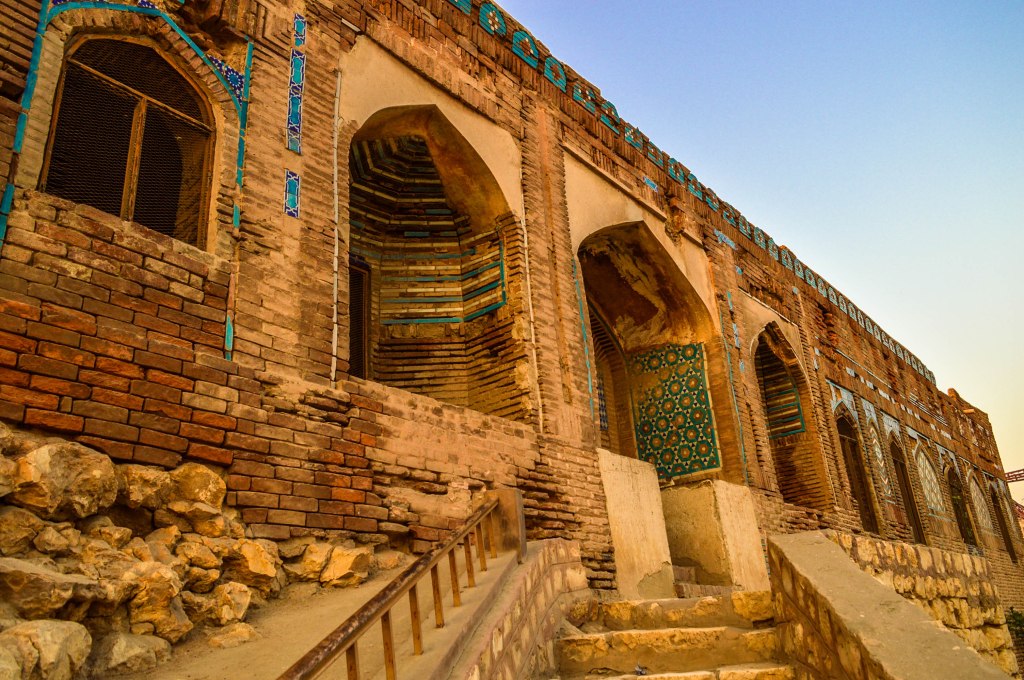
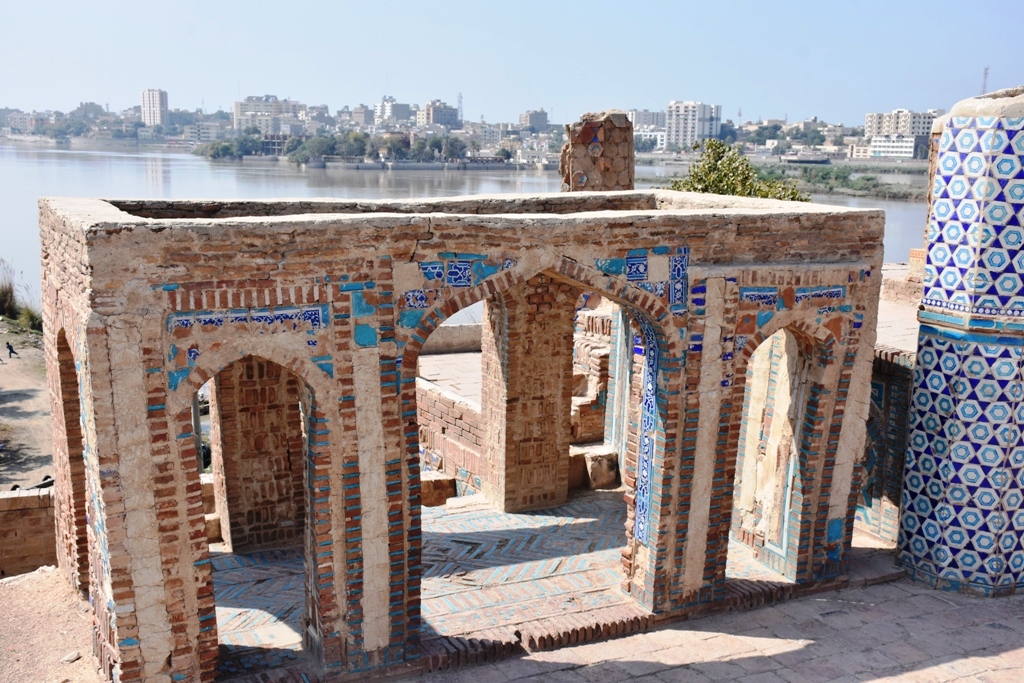
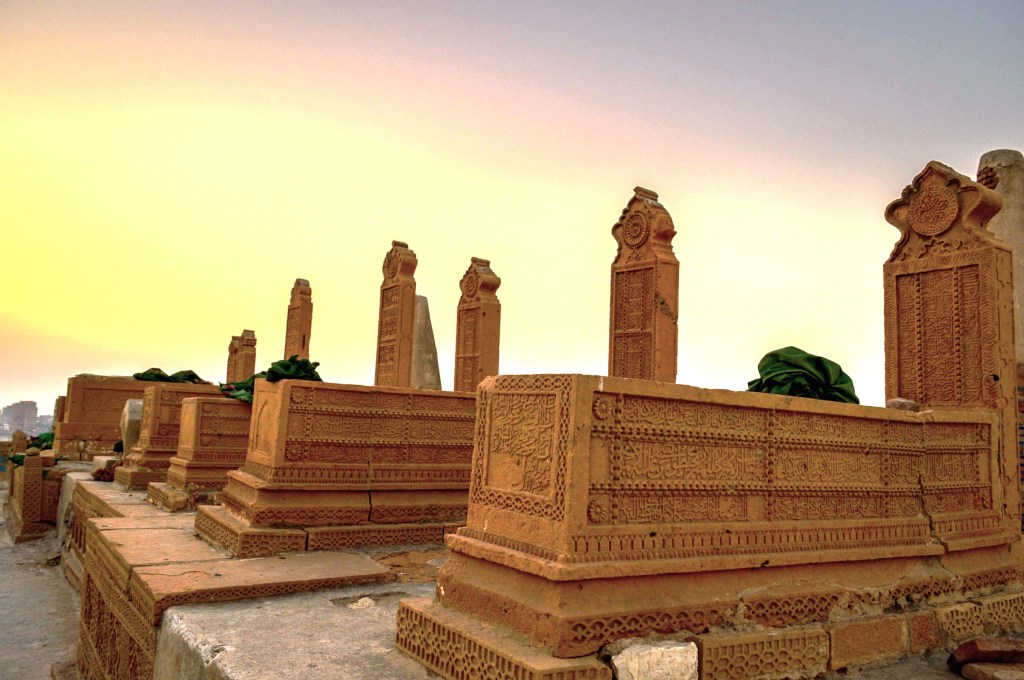
The ground floor accommodated rows of hujras probably for the convenience of travelers while the roof terrace contains numerous graves including the grave of Abdul Qasim Namkin. The building façade as well as passage leading to the roof terrace was decorated with blue tiles to enhance the beauty and aesthetic impact of the edifice. The entire construction of the building was carried out with yellow sandstone also used in Makli and elsewhere in Sindh. Quranic verses and Persian Inscriptions executed in Naskh style on the tombstones are one of the finest in the region. At the upper level a small mosque has also been constructed on the western edge of the roof terrace and is profusely embellished with blue, turquoise, and white tilework. The main entrance of the tomb lies on the south side while on the north river Indus flows gently after crossing the Lansdowne and Ayub bridges connecting Sukkur with Rohri. The tomb is decorated with blue and white glazed tiles in similar style found on the pavilion of Mir Masum in Sukhar.
 Naqoosh-e-Javidan