
Name of Monument: Sharda Mandar
Location: Sharda, Azad Kashmir
Period of Construction: C.7-9th Century AD
Sharda temple is located in Neelum Valley, Azad Kashmir. It was part of Hindu Shahiya dynasty and important learning center. It is believed that Sharda script was originated form this institution. The temple is built in the Kashmiri architectural style using red sandstone. Historical records of the temple’s architecture are scarce. A late 19th century account by the British archaeologist Aurel Stein describes the temple’s walls as intact to a height of approximately 20 feet, and its pillars rising approximately 16 feet.
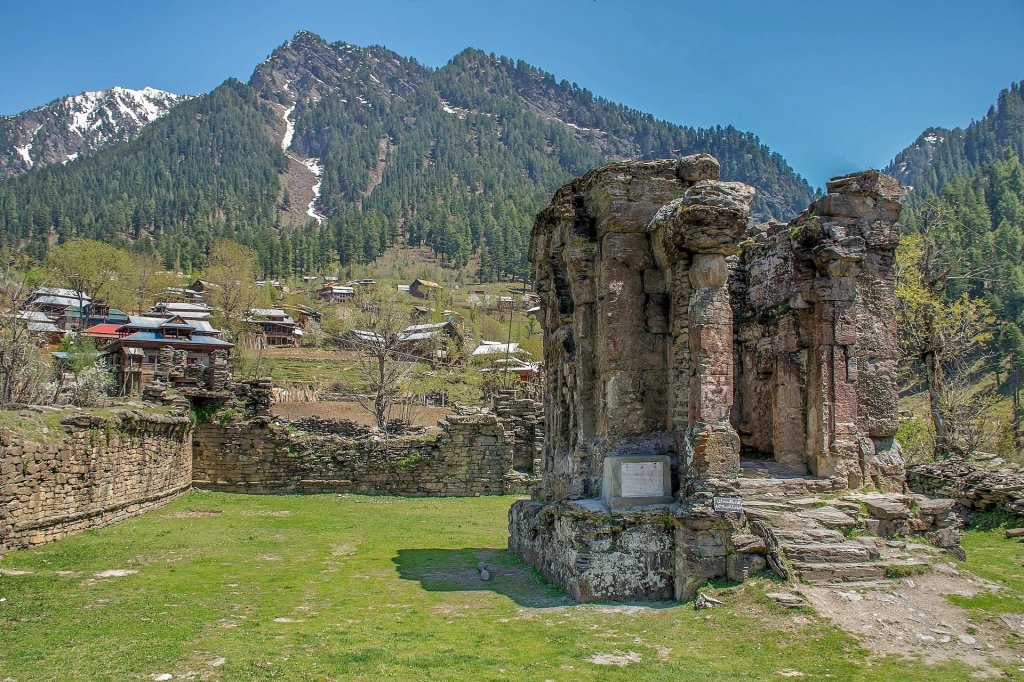

The compound is situated on a hill, approached on its west side through an imposing stone staircase. The facades are repetitive. The design of the temple is simple, with a plain conical Sharada spire. It sits on a raised plinth, 24 square feet in area and 5.25 feet (1.60 m) in height. The walls of the cella recede 2 feet from the edge of the plinth. The temple is surrounded by a quadrangle which measures 142 feet by 94 feet. The quadrangle is enclosed by walls of 11 feet in height and 6 feet in width. On the north, east, and south, the walls of the cella are adorned by trefoil arches and supporting pilasters, which are constructed in high relief. Below these are small, trefoil-headed niches covered by double pediment showing the Greek influence. Although a pyramidal stone roof is more typical to Kashmiri architecture, in Stein’s description, the temple is covered by a low shingle roof. By the 21st century, the roof is no longer present, and the interior of the temple is exposed to the elements. The temple appears imposing even from outside the walled enclosure, because of the plinths it is raised on to equalize the uneven elevations of the ground. The north side of the wall contained a small recess, in which two ancient linga could be seen.
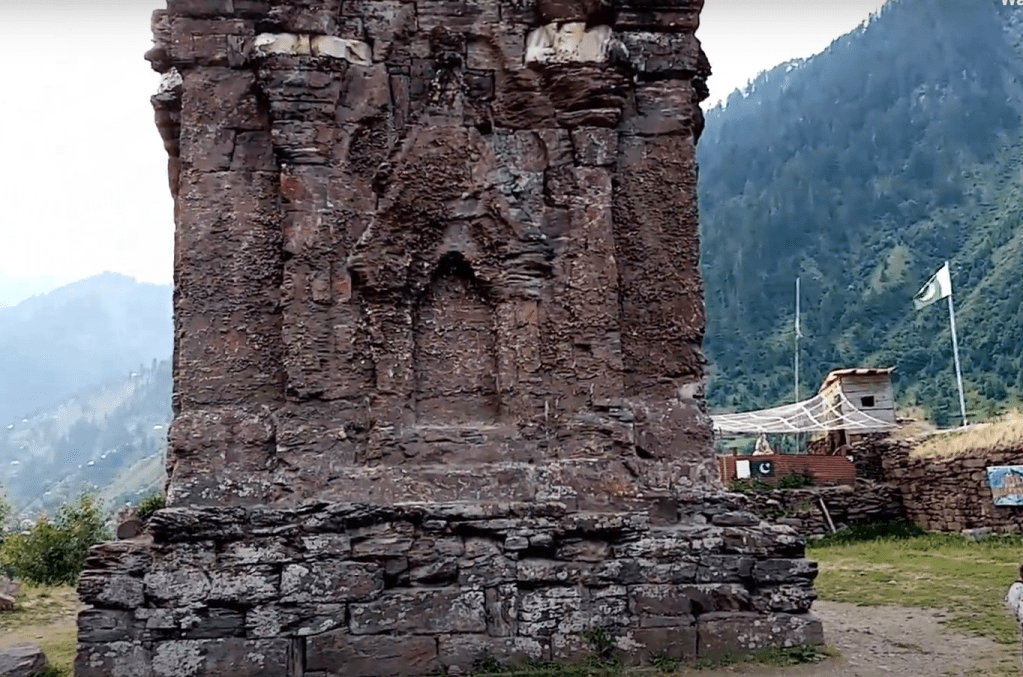
The interior of the cella is plain and forms a square of 12.25 feet on each side. It houses a large slab of stone measuring 6 feet by 7 feet. This slab covers the holy spring where the goddess Sharada is believed to have appeared to Rishi Shandilya. In the 19th century, this sacred spot was surmounted by a red cloth canopy and tinsel. The remainder of the interior was filled with ornaments of worship such as conches and bells.[
 Naqoosh-e-Javidan