
Name of Monument: Shingardar Stupa
Location: Barikot, Swat Valley
Date of Foundation: 2nd Century AD
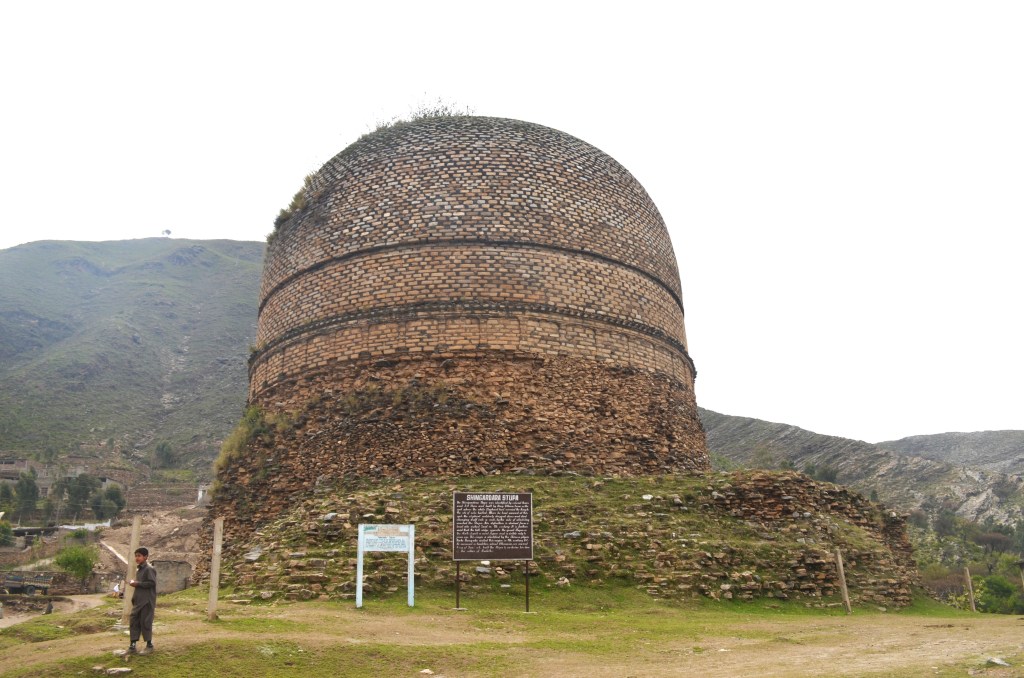
Shingardara Stupa in Barikot Swat is one of most important ancient monuments in the Swat Valley. It is located on road connecting Mardan with Mingora, 10 miles before the later. The stupa is circular in plan and one of the tallest stupas of Swat Valley. It was built by Uttarasena, the ancient king of Swat, to incorporate his portion of Buddha relics in 2nd century AD. The stupa structure is made up of large stones and layers of thin slate. The Shingardar stupa in Barikot swat was identified by Colonel Deane and S.A. Stein during British period with a famous stupa built by King Uttarasena. According to popular tradition at the site the white elephant holding the Kings section of Buddha relics stood. When he got to the place, the elephant suddenly fell down and died and turned into a stone. Next to the rock the King then erected the stupa. This stupa myth is based on local customs was recorded by Deane and Stein. This tradition is preserved by Hieum Stang who visited Swat in the 7th century A.D. It is said that when the elephant arrived at the site with Buddha’s remains on his back, his body miraculously turned to stone after his death.
Originally, the Shingardar Stupa rested on a square, platform but due to human vandalism the weathered stones from the upper part and much of the internal stone around the platform were removed for construction of homes and pavement of streets. the shaft of the stupa is divided into different parts with the help of rings and recessed friezes. Some remnants of stucco plaster on the drum are still discernible. One of the section of drum is adorned with square pilasters having a base and capital, inspired from Greek tradition. On the upper cornice, there is a shallow projection of around 0.50 meters, creating a play of light and shadow. Total height of the stupa from the base to apex of the dome is 90 feet.
Traces of a Buddhist settlement can be observed about 50 feet from the base of the stupa on its eastern and southern sides, now encroached upon by modern dwellings.

 Naqoosh-e-Javidan