
Name of Site: Sirsukh
Location Taxila
Date of Construction: c. 1st Century AD
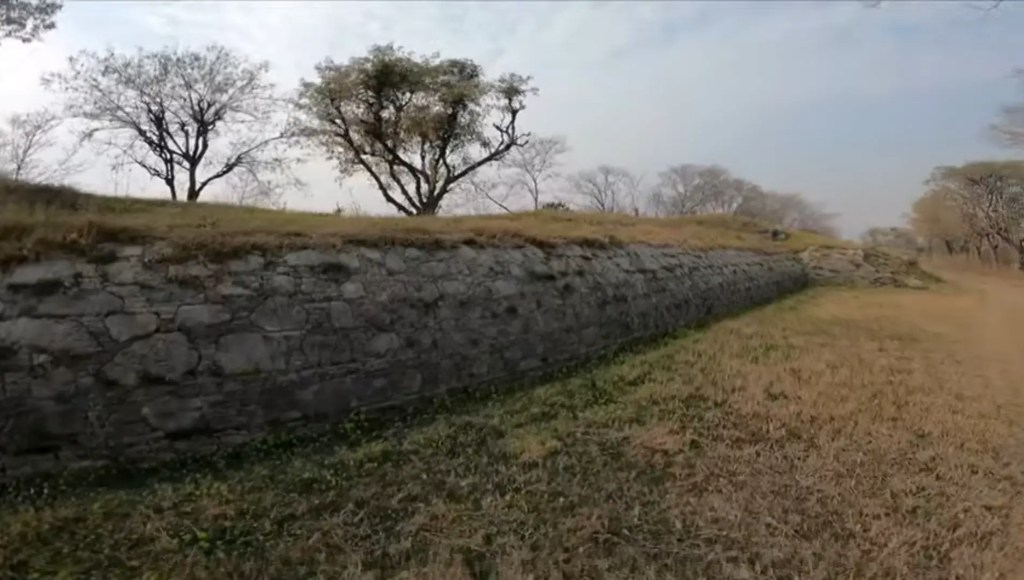
The city of Sirsukh is said to have been founded during the Kushan era after 80 AD and is the last of the great ancient cities of Taxila. The invaders decided to abandon the older city of Sirkup and build a newer city on the other side of the Lundi-nala. The wall of the city is about 5 kilometers long and about 17 feet thick. The city wall covers an area of around 4000 x 3280 feet seen along the east-west direction and is laid out in a typical Central Asian style, complete with suburbs. Sirsukh was left uninhabited when the White Huns invaded the Punjab at the end of the fifth century AD. To the north-east of the city flows the Harro river whereas to the south the Lundi-ravine is present.
The ancient city was excavated only on a very small scale in 1915-16 AD, and further excavation work has been impeded by a high-water table which threatens the integrity of ancient structures. It was included in the World Heritage List of the UNESCO in 1980 as part of Taxila.
 Naqoosh-e-Javidan