
Name of Monument: Tor Gumbat and Spin Gumbat
Location: Thal; Kohat-Parachinar Road
Period of Construction: Shah Jahan period c. mid 17th century
Materials of Construction: Stone, River Pebbles and Lime mortar
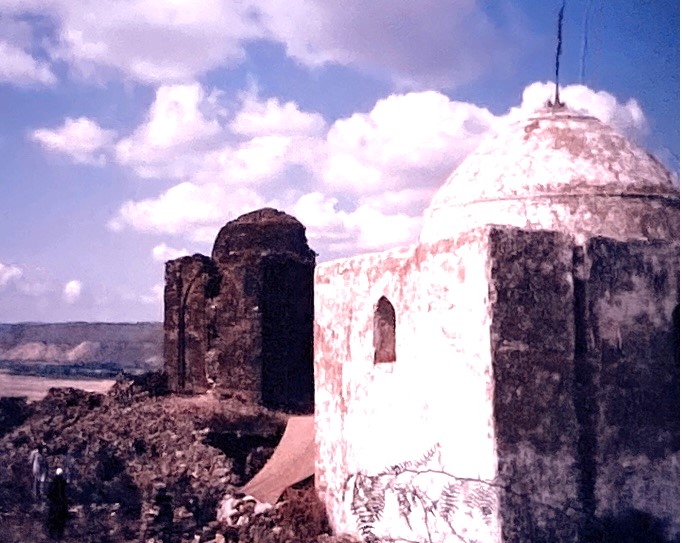
Tor and Spin Gumbat, two simple but impressive tombs are situated on a hill on the right bank of Kabul River. The site is situated on historic Thal-Parachinar route was frequently used during the Ghaznavid period. The Tor Gumbat seem to have constructed earlier than the Spin Gumbat. It is not known that who was buried in these tombs.
Tor (Black) and Spin (White) was built with local kanjur stone. The Tor Gumbat has fair face stone which has turned black due to weathering while Spin Gumbat was plastered, and lime washed. The tombs are square in plan and converted into octagon with the help of squinch arches. Tor Gumbat is 24 feet wide in the exterior and the wall are 16 inches thick. The main entrance, squinch arches and domes were constructed with bricks. The tombs are devoid of any decoration. The phase of transition is topped by a series of rectangular holes at a regular interval, which suggests that these holes were used for fixing wooden cross beams to strengthen the side of the building which have been originally lime plastered both internally and externally as traces are still visible at various spots. The Tor Gumbat has high blind recessed arches within which the entrances provide access into the interior.
Spin Gumbat is located southeast of Tor Gumbat and also has a square plan. The entrance lies on the eastern side 12 inches high from ground and 3 feet 4 inches wide with a pointed arch the entrance. Similar openings can be seen on all the other three sides while the rest of the walls are plain. The south side of the chamber has two water shoots. This square chamber has a meter high round drum with a running molding in plaster and is topped by a pointed dome with inverted lotus-like molding. Internally, the chamber walls have pointed sunk arches one on each side with a small projected cornice on the top. This square chamber is converted into an octagon by squinch arches and intermediate arches topped by a projected cornice to receive a pointed dome.
 Naqoosh-e-Javidan