
Name of Monument: Unknown tomb
Location: Washuk
Province: Baluchistan
Period of Construction: c. Middle of 16th Century
Material of Construction and finishes: Stone
Brief Description
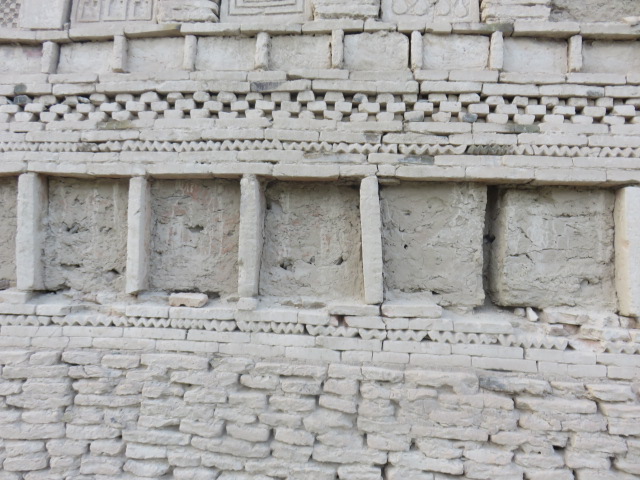
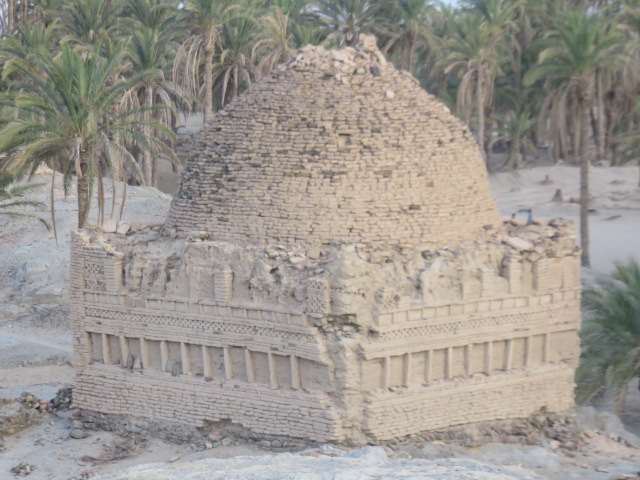
An unknown tomb were built in fairface brickwork and inspired from the Zoroastain tombs. It was built around in the middle of the sixteenth century. The tomb is square in plan and converted into sixteen-sided polygon. Finally, a tall pointed dome directly rests over the walls. The important feature of the tombs is the exterior façade which has rectangular penels. Terracota plaque tiles having a variety of geometrical patterns are clad in them. The most common features are cross, zigzag pattern, eight pointed stars within a circular ring and chain of diagonal squares, mudakhil pattern and merlons. There is also frieze of chain pattern in the exterior wall like tomb of Muhammad bin Haroon. Specially molded plugs along with burnt bricks were used in the exterior. The tomb has thick brick wall with only one opening. In the interior the walls have blind arched niches inspired from the Persian tradition. Squinch arches convert the square room into sixteen sided polygonal rooms and then smoothly transform into a circular base over which a high onion shape dome rest. The springing point of the dome is pronounced with a ring of dentil pattern. The exterior facades are vertically divided into horizontal rows of rectangular panels fitted with terracotta plaque tiles have geometrical and abstract patterns. The rectangular panels are separated by chain and zigzag patterns.
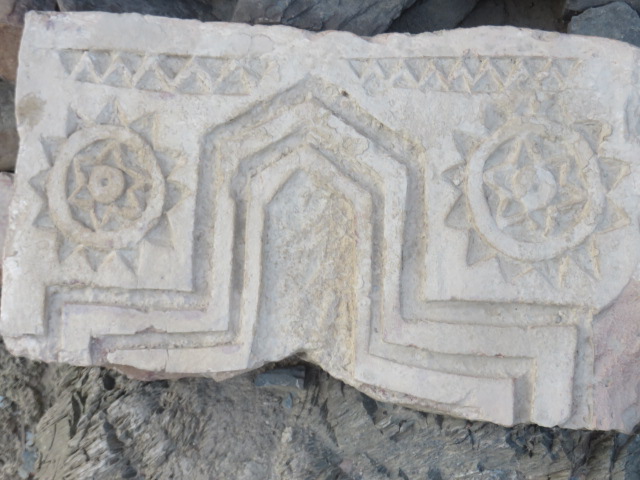
Detail of Decoration on tiles of Unknown tomb at Washuk
 Naqoosh-e-Javidan