
Name of Monument: Maqbara Hakim Abul Fateh Gilani
Location: Hasan Abdal.
The tomb of Hakim Abul Fateh Gilani lies in Hasan Abdal. Abul Fateh Gilani, a noble of Akbars reign, was son of Maulana Abdul Razzaq who served as Sadr of Gilan for a long time. When Gilan was conquered by Shah Tahmasp, Ahmad Khan the ruler of Gilan was taken prisoner and Maulana Abdul Razzaq was tortured to death. Hakim Abdul Fateh along with his two brothers Hakim Hammam and Hakim Nuruddin fled from the country and came to India in Akbars 20th regnal year. After their arrival at the court, they were taken into imperial service apparently on account of the eminence of their family and their own personal qualities. Abul Fazl narrates that, “Although all three brothers were the distinguished of the age for the customary excellencies, yet Hakim Abul Fateh Gilani was especially remarkable for his tact, his knowledge of the world and for his power to read the lines of Forehead.” Abdul Qadir Badauni, another historian of Akbar period recognizes his intellectual eminence.
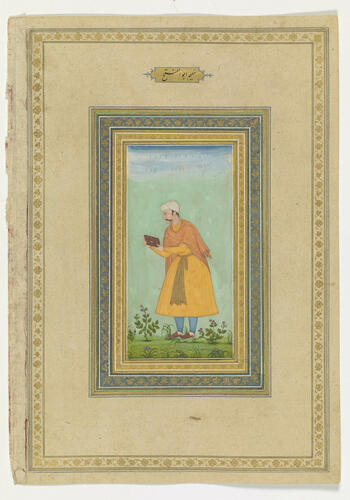
After about four-year service of the court, in 1579, he was appointed as sadr and amin of Bengal. While he was working in Bengal the Qashals rebelled. The imperial armies were overthrown and a number of officers including Abul Fateh Gilani and his brother Nuruddin were taken prisoner. Abdul Fateh managed to escape and reached to the court, but his younger brother was killed.
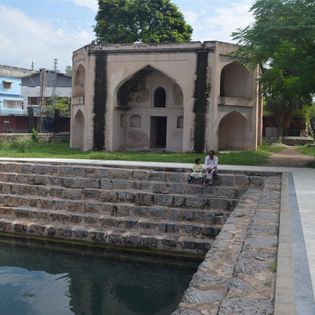
The site contains the tomb of Abdul Fateh Gilani (d. 1589) and Hamam Gilani (d. 1595) and a fish tomb on the west side. They were buried here on the orders of Mughal Emperor Akbar. According to Emperor Jahangir, the pond and tomb were built by Khawaja Shamsuddin Muhammad Khawafi, who was said to be Akbar’s minister between 1581 and 1583. A paved path leads from the pond to a small walled garden. The tomb is square in plan with chamfered corner on the south and western corner. It is a two-story structure. A large arched iwan is found on each of the cardinal sides of the tomb and span the height of both stories. Flanking the large iwans are 4 smaller niches – also built in the Persian style.

 Naqoosh-e-Javidan