
Name of Monument: Maqbara Shahu Qalandar
Location: Panjgor
Period of Construction: 15th-16th Century
Material of Construction: Bricks
The shrine of Shahu Qalandar is located in the Gharibabad area of Chatkan, along the Rakhshan River, in the heart of Panjgur, Balochistan province. The exact identity of Shahu Qalandar and the time when his tomb was built remain uncertain. However, based on its architectural style, the construction of the tomb is believed to have taken place in the 15th or 16th century. The design of the tomb follows the Zoroastrian tomb style, featuring horizontal bands adorned with terracotta plaques displaying geometric and abstract patterns, located just below the parapet. The tomb is similar to unknown tomb at Washuk in terms architectural style.
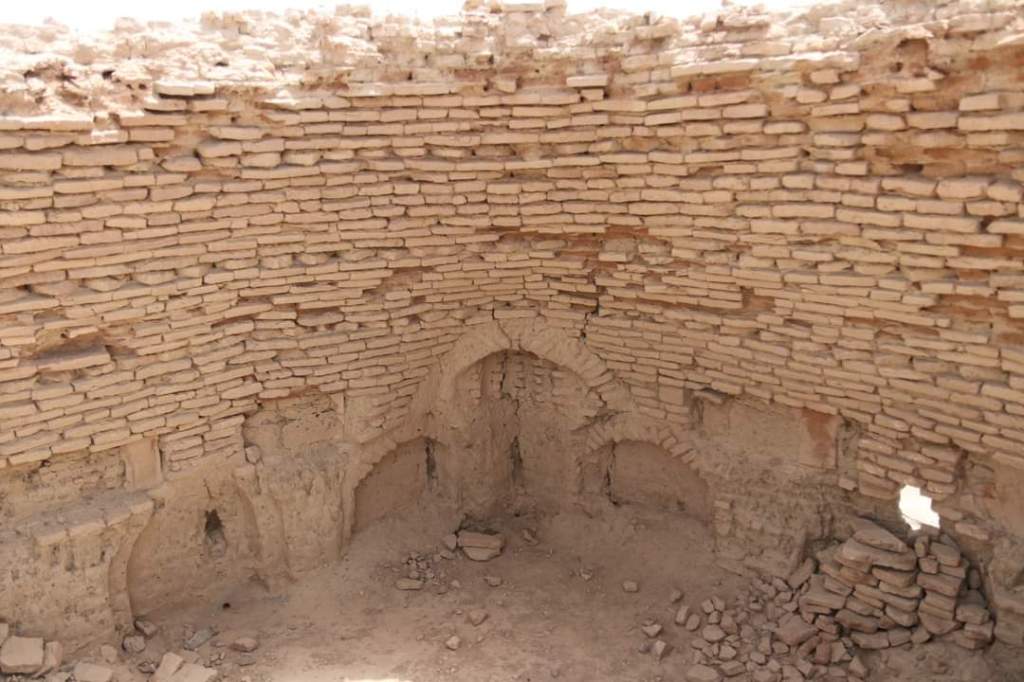
The tomb has a square plan and is topped with a dome. The entire structure is constructed using fair-faced brickwork. The construction technique aligns with the local tradition, wherein squinch arches are employed to transform the square base into a circular one that supports the dome, starting from the plinth level. The dome itself has a slightly pointed shape, deviating from the typical hemispherical design. The dome’s architectural style, combined with the stones used in the shrine, adds to its significant architectural value.
Unfortunately, due to a lack of maintenance and proper care over the years, the tomb has undergone several alterations. The deterioration has led to the dislodging of stones and bricks, causing damage to the overall structure of the tomb. These are rare monuments in terms of architectural form and therefore, these must be preserved.

 Naqoosh-e-Javidan