
Name of Monument: Dargah/ Mazar of Sultan Ali Akbar
Location: Sura Miani, Multan
Date of Construction:1585 AD
Material and Method of Construction: Brickwork. Glazed tile finish
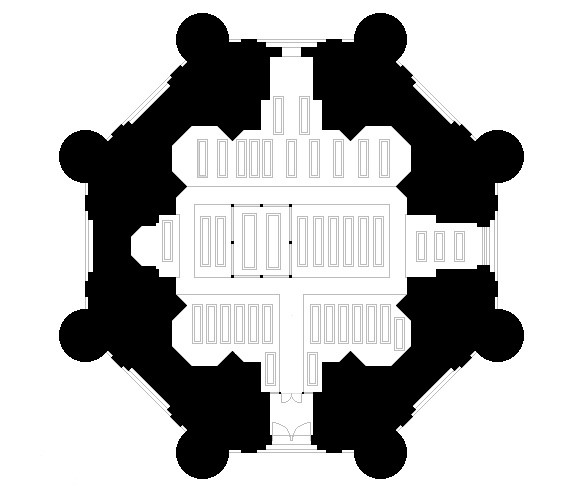
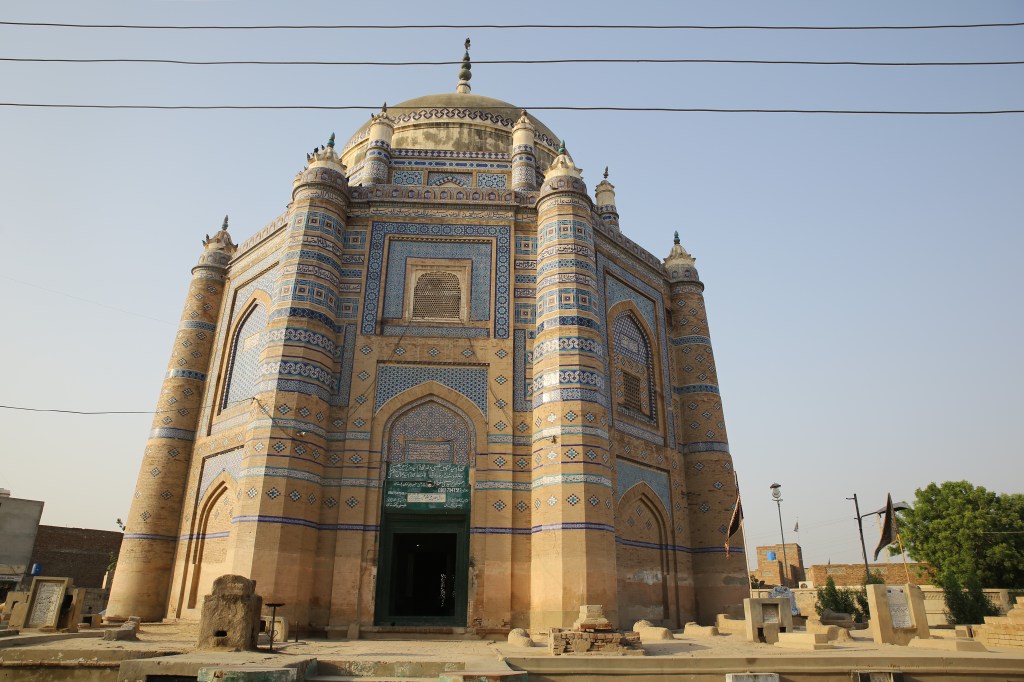
The mausoleum lies northwest of the ancient city of Multan. He was a saint of Ismaili order and one of the great grandsons of the Ismaili dai Shams Sabzwari. According to an inscription, the mausoleum was designed and executed by Ibrahim and Rajab, son of Musa Lahore. It was built in 1585 on the same principles adopted in the tomb of Shah Rukn e Alam, there the tomb is called mini Rukn e Alam. The tomb rests on square brick platform measuring 98 feet 6 inches side and 6 feet high. It is approached through a flight of steps located on western side. The mausoleum is octagonal in plan and consisted of three well-proportioned storeys making it an elegant edifice. Each side of the octagon on the ground floor is 16 feet 4 inches supported by round towers at angles. The ground floor rises to a height of 37 feet 6 inches. The inward sloping towers at the either side of western facade are octagonal in plan and profusely decorated with as many as 31 horizontal bands of glazed tiles. The other towers have simple geometrical designs. The facade of the mausoleum is such that each alternate facade has almost similar design. The NE, SE, NW and SW have two rectangular panels one above the other having four centered recessed arches. The other sides have bigger panels at lower levels and almost square panels at the top. The eastern and western facades have entrances in such openings. Each face of the octagon has received different treatment for decoration. A long horizontal band turns horizontally runs horizontally at the top of these panels on which genealogical details of the saint is recorded. The paprapet wall has a crenelation of blind recessed merlons each having the word (Allah) in the center.
The first floor is also octagonal in plan and strengthen with corner towers but smaller than the ground floor and crowned with turrets, thus leaving circumambulation space on all sides. The second story has been treated with faience mosaic revetment. Each octagonal face is horizontally divided into three oblong recessed panels divided by thin flat brick borders. The central panels incorporate four centered arch and has an opening. A frieze consisted of cartouches and stars runs alternately above the oblong panels. Finally, the low-neck drum and dome rest on first storey.
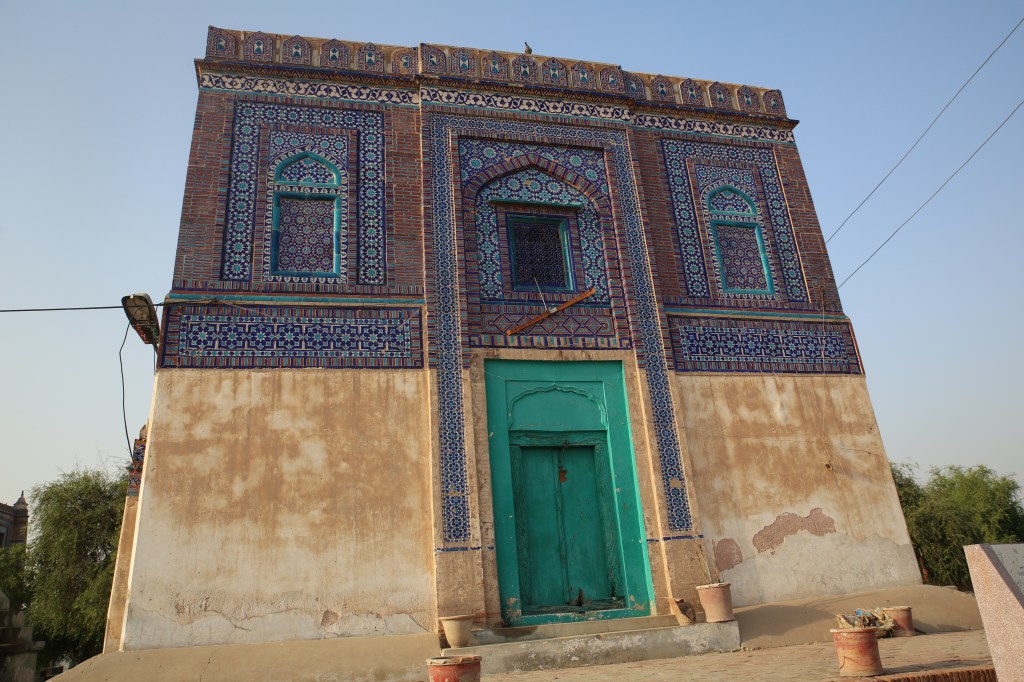
Close to the tomb lies the tomb of the mother of Sultan Ali Akbar. This flat roof tomb has rectangular plan and have similar decorative scheme as of Sultan Ali Akbar.
 Naqoosh-e-Javidan